
Grow 101 · Creation Stewardship
Rotational Grazing: Moving Animals the Way Nature Does
Left in one place, animals wear ground down. Moved often, the same animals build it up. The difference is timing, not livestock.
Graze, then move, then rest
Herds in the wild bunch tightly, eat hard, and leave. Pasture recovers because nothing returns until it has regrown. Small paddocks and frequent moves reproduce that on two acres.
Birds follow the herbivores
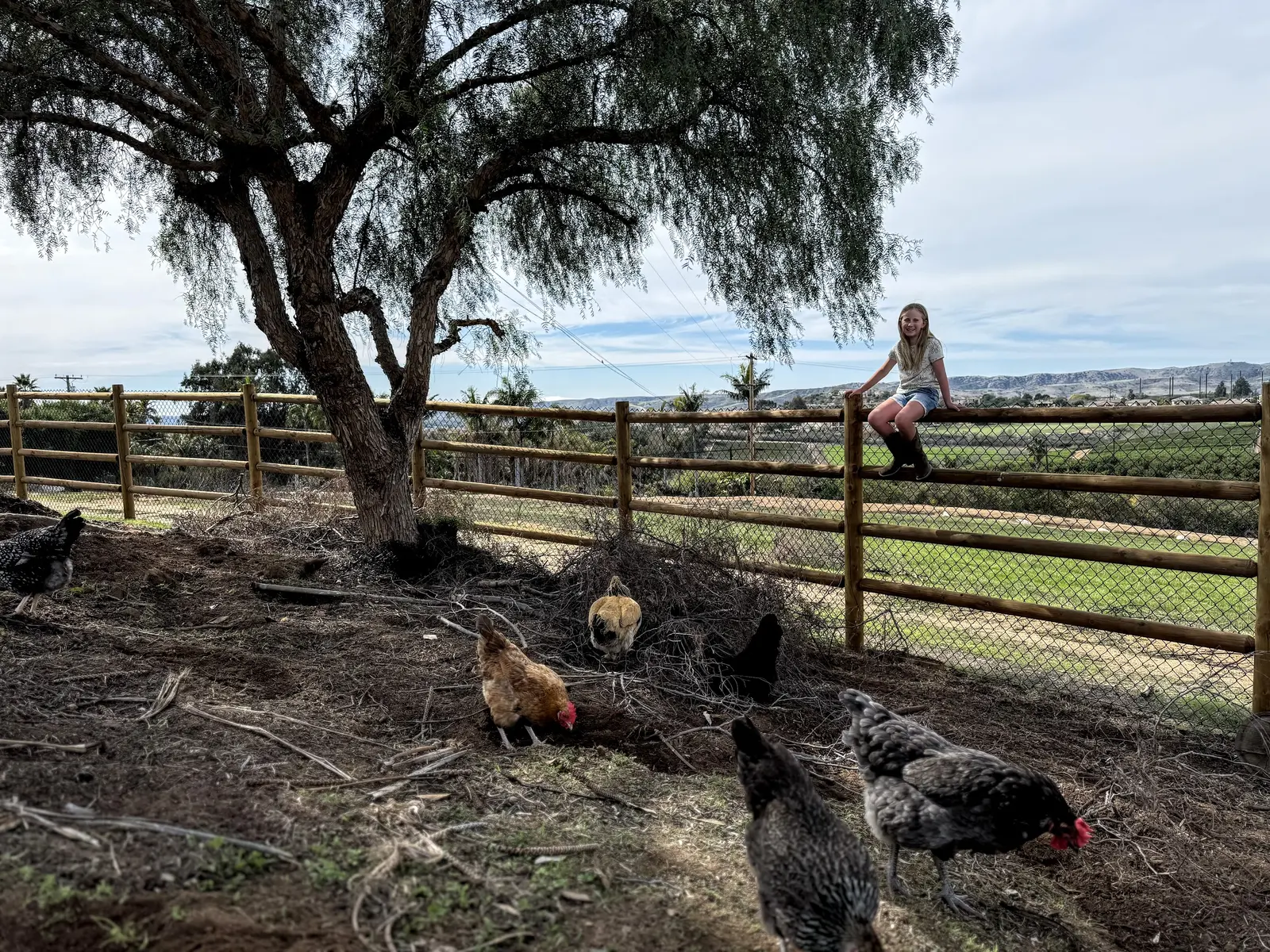
Behind the grazers come the birds, scratching manure apart, eating larvae, and spreading fertility. Our chickens and ducks do that work a few days after the goats have moved on.
On our scale
We use light portable fencing and short stays. It is more daily labor than a permanent pen, and the pasture tells us it is worth it. We take this pattern as inspiration from Joel Salatin’s well-known work, adapted to a dry hilltop and a much smaller herd.
Creation Stewardship
Every creature has a nature. Honoring it, rather than working against it, is part of the job.